Engineering Insights
Total Cost of Ownership for Pump Explained: TCO Beyond Purchase Price
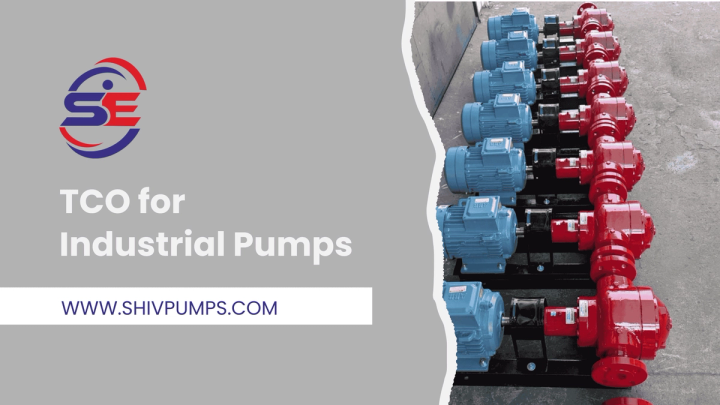
Why TCO Matters More Than the Price Tags?
When investing in a pump, it’s tempting to focus on the up-front cost. But in reality, the initial purchase price is just the tip of the iceberg, often accounting for only about 10 percent of the total cost of ownership over the pump’s lifecycle.
The real financial impact comes from what happens after installation: energy consumption, operation and maintenance, downtime, and even the cost of eventual replacement or disposal. For industries relying on continuous flow, be it in chemical processing, water treatment, or manufacturing, understanding total cost of ownership is the key to sustainable profitability and operational excellence.
The Anatomy of Pump TCO: What Really Drives Your Costs?
The total cost of ownership for a pump is a sum of several interlinked components:
| TCO Component | Typical % of Total Cost |
|---|---|
| Initial Purchase | 10% |
| Energy | 32–40% |
| Maintenance | 20–25% |
| Downtime | 9% |
| Other (Ops, Disposal, etc.) | Other (Ops, Disposal, etc.) |
Typical TCO Table
Energy cost is often the largest slice of the pie, especially for pumps running 24/7. Even a small improvement in pump efficiency or a reduction in energy consumption can translate into substantial cost savings over time. Maintenance and repair costs; think impeller replacements, seal changes, and routine lubrication are the next big contributors. Unplanned downtime is the silent profit killer: every hour a pump is offline can mean lost production, missed deadlines, and frustrated customers.
Real-World Case Studies: TCO Optimization in Action
Let’s bring these numbers to life with real examples:
- Manufacturing: Kodak’s lake-water pumping system overhaul replaced inefficient pumps with energy-efficient models, slashing energy costs and improving reliability. The result? Lower TCO and a more productive operation.
- Chemical Processing: A plant suffering from frequent seal failures and downtime upgraded to high-performance seals. The outcome: unscheduled downtime dropped to zero, maintenance costs fell by 80%, and annual savings topped $336,000.
- Water Treatment: By installing variable speed drives, a water treatment facility cut energy use by up to 46% at partial loads, while also reducing wear and extending pump life.
These stories underscore a universal truth: TCO optimization isn’t just theory; it delivers measurable, bottom-line results.
How to Calculate the TCO of an Industrial Pump
Calculating TCO is about seeing the full financial picture. Here’s how it works in practice:
- Define the Pump’s Lifecycle: Estimate how long the pump will be in service and how intensively it will be used.
- Add Up All Costs:
- Initial cost: Purchase, installation, and commissioning.
- Energy cost: Projected electricity use over the pump’s life, factoring in efficiency and duty cycle.
- Maintenance cost: Routine servicing, spare parts, lubricants, and labour.
- Downtime cost: Lost production or revenue during outages.
- Disposal cost: End-of-life removal or recycling, minus any residual value.
- Discount Future Costs: For a true cost of apples-to-apples comparison, adjust future expenses to present value using a discount rate.
- Compare Alternatives: Use TCO analysis to evaluate different pump models, materials, or system designs, not just the cheapest up-front option.
What Makes a Pump Truly Cost-Effective? (And How to Reduce TCO)
A pump’s TCO is shaped by its design, how it’s operated, and how it’s maintained. Here’s what sets a low-TCO pump apart:
- Energy-Efficient Design: Pumps with optimized impellers and hydraulics, like those from Shiv Pumps, operate closer to their Best Efficiency Point (BEP), minimizing energy waste. Even a modest efficiency gain can save thousands annually.
- Right Sizing: Oversized or undersized pumps are a recipe for inefficiency and excess wear. Proper sizing ensures the pump runs at optimal load, reducing both energy and maintenance costs.
- Material Selection: Using corrosion-resistant materials (like SS316 or PVDF) in aggressive environments reduces the risk of premature failure and costly repairs.
- Ease of Maintenance: Features like back pull-out design and modular construction mean faster servicing, less downtime, and lower labor costs.
- Predictive Maintenance: Smart pumps with sensors can detect inefficiency or impending failure, allowing for proactive intervention before a breakdown occurs.
Case in Point: Shiv Pumps’ TCO-Optimized Solutions
Shiv Pumps’ ANSI Process Pumps and SS Pumps are designed with TCO in mind. Their back pull-out construction allows for rapid maintenance without disturbing piping, while high-efficiency impellers and robust materials ensure reliable, low-cost operation. For highly corrosive or hazardous fluids, PVDF Pumps and Magnetic Drive Pumps offer seal less, leak-free performance, minimizing both downtime and environmental risk.
Frequently Asked Questions
How to calculate the TCO of an industrial pump?
TCO is calculated by adding up all costs over the pump’s expected life of the equipment: initial purchase and installation, energy consumption, cost of maintenance and repairs, downtime, and disposal, then subtracting any residual value. Using structured TCO calculators or templates can help you compare different pump options and make data-driven decisions.
How to reduce TCO for a pump?
Focus on energy efficiency, proper sizing, and preventive maintenance. Choose pumps with optimized impellers, robust materials, and easy serviceability. Implement predictive maintenance and invest in operator training. Partnering with reliable suppliers for OEM replacement parts and technical support also helps keep TCO in check.
The Shiv Pumps Advantage: TCO-Driven Performance
At Shiv Pumps, we believe that a truly cost-effective pump is one that delivers reliable performance, minimal downtime, and low energy consumption—year after year. Our product range, from Centrifugal Pumps to Positive Displacement Pumps, is engineered for long-term value, not just a lower sticker price.
Ready to optimize your pumping system? Explore our full product catalogue or request a TCO analysis tailored to your application.